I saw some relevant news from MedPage Today regarding the impact of the pandemic on mental health, psychiatric practitioners, and the way we do therapy as a result. I still see at least 50% of my patients virtually now.
I'll put all the articles here for convenience:
More and more psychiatrists are facing burnout amid the pandemic-related mental health crisis. (Business Insider)
According to a study including a representative sample of the U.S. adult population ages 20 and older, telehealth was utilized by more than half of patients for a behavioral health condition during the early months of the COVID-19 pandemic. (Journal of General Internal Medicine)
A study in the UK is expanding to the US to look at the longer-term effects of isolation from the pandemic. They are looking for participants to fill out surveys to gather results to help provide recommendations to improve people's well-being and resilience throughout and after the pandemic. Click the link below for more information and sign up.
I've been getting a lot of resources on how to deal with anxiety around COVID-19 and how to deal with the quarantine at home, so I thought it might be helpful to post things here so that people can access them and see what they can use. I will add more as I come across them.
Bessel van der Kolk, MD, On the Global Coronavirus Crisis: Steering Ourselves and Our Clients Through New & Developing Traumas https://catalog.pesi.com/ShowTime/3924402
Mental Wellness Resource Packet (especially good for therapists to use with clients):
Many people, including art therapists, are looking for resources to help people manage during this unprecedented time of managing a global pandemic with the novel coronavirus COVID-19. The American Art Therapy Association has worked hard to create a resource page with many kinds of links to provide assistance to help art therapists as well as for the public to access for themselves. Click on the picture below for the resource page.
A lot of people are trying to find ways to cope with self-isolation and social distancing during this time of managing the coronavirus pandemic. Some people are accessing art therapists in remote sessions or doing guided artwork at home. Here is an article that focuses on how making art helps people cope.
Many
countries have currently imposed either a formal lockdown, or otherwise
recommended that people stay indoors in their own homes as much as
possible. This form of social distancing will help slow the spread of
the coronavirus SARS-CoV-2, but it’s not always easy. However, previous
research on isolated groups suggests that art therapy might offer some
support.
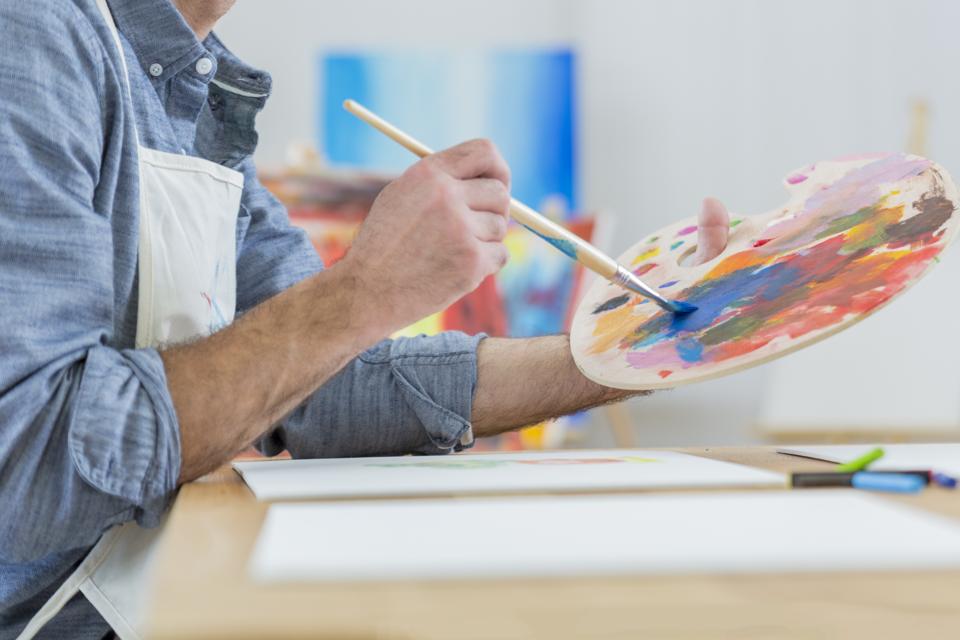
Art therapy has been successful in combating depression among isolated populations such as prisoners ... [+]
Getty
People in isolation are
at increased risk of developing mental health problems, such as
depression or increased anxiety. Researchers know this from studies that
have previously been done among people who were quarantined during
previous disease outbreaks.
In the 2003 SARS
outbreak, for example, only those directly at risk were quarantined, and
only patients were isolated. But now, during the coronavirus outbreak,
many of us are stuck at home. For people who live alone, this situation
is also likely to put them at risk of depression or anxiety.
Even
though being isolated in this way is new for many of us, there have
always been groups of the population who lived with limited social
contacts. Think of prisoners, for example, or patients recovering from
medical procedures that require a period in isolation. These groups have
been well-studied, and researchers know quite a lot about how people
fare when they’re spending a large amount of time on their own. One
thing that seems to help is art therapy.
Art therapy is a form of
psychotherapy that uses the creative arts as a therapy medium. Instead
of talking for an hour, you might be painting or sculpting or otherwise
expressing your thoughts through a creative medium.
In some of these
situations, people received group art therapy. Of course that’s not
possible during the COVID-19 outbreak, but some art therapists are
finding ways to connect with people online. The American Art Therapy
Association collected resources for art therapists to help them continue to do their work during the outbreak.
Not everyone has access
to a remote therapist to guide their art therapy, so some are turning to
online guides. This is different from the guided forms of art therapy
that have been proven to work well with people in isolation, so it may
not work as well — but with no other option for therapy, making art at
home is at least a step in the right direction!
The UK’s Channel 4 is even working on a program with Turner Prize-winning artist Grayson Perry
to inspire families in isolation to make art at home. But many people
have taken to simply creating art on their own to work through their
thoughts while in self-isolation, and some have shared their art on
social media.
Art therapy isn’t a panacea - its effects on dementia
are still debatable for example — but its use to combat depression in
social isolation is well-documented, and it may just help some people
currently struggling with being in lockdown.