Tuesday, August 24, 2021

The Art of the Unplug by Gratitude Addict Lauren Zalewski

Thank you so much, Lauren Zalewski, for sharing your journey in using art in a mindful way to find greater joy and wellness!  It warms my heart to see you discover how art works for you in some of the most unexpected ways!  Thank you also for sharing with so many other people who can benefit from engaging in many art forms for themselves for their own well-being.

#art #mindfulness #artforwellness

Read her post and blog post from the link below!

~~~~~~~~~~~~~~~~~~~~~~~~~~~~~~~~~~~~~~~~~~~~~~~~~~~~~~~~~~~~~~~~~~~~~~~~~~~~~

My latest piece on how my unexpected week-long vacation turned into a STAYcation and the profound GRATITUDE-boosting and mindful week I had when I decided to UNPLUG!

Thank you Lacy Mucklow, MA, ATR-BC, LPAT-S, LCPAT, ATCS for blessing me and my group with incredibly healing advice on using art for mindfulness and emotional wellness! Your words have resonated deeply with me and so many others!

Enjoy!

“THE ART OF THE UNPLUG” – FINDING GRATITUDE ON MY WEEK LONG “STAYCATION!”

An excerpt from her post (thanks for the mention!):

Ironically, the week prior to this vacation, I interviewed a famous art therapist and author on my live broadcast, “Gratefully Living the Chronic Life.”  Lacy Mucklow is a New York Times bestselling author and has put out numerous adult coloring books, one of them entitled, “Be Grateful and Color.”  She was an incredible guest who shared with us for the hour about how we can use art for healing.  Her underlying message was that art is personal, there is no right or wrong way to do it, and it is an incredibly mindful and healing tool we can all use in our lives.  She talked about overcoming our fear of doing something “wrong” and not holding back.  Her message really resonated with me and made me want to paint even more.

Read the entire story here:


Friday, August 20, 2021

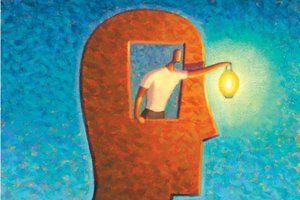
Why Do People Become Therapists?

Some people wonder why we become therapists.  This study discovered that people become therapists and stay in the field - despite the challenges in a lot of different ways - because they want to help people improve, simple as that.  It is a great reward to see people feel better.

https://www.psychotherapynetworker.org/blog/details/667/why-would-anybody-become-a-therapist

Why Would Anybody Become a Therapist?

Reflecting on the Soul of Our Professional Identity

Barry L. Duncan

It’s no secret to anybody in our field that this is a tough time to be a therapist. In public agencies, we’re underpaid, overworked, and held to unattainable “productivity standards” (24 to 28 client hours a week; 30 to 34 scheduled appointment hours to make up for cancellations and no-shows). We’re subjected to a continual onslaught of paperwork to secure payments, and frequently face cutbacks and layoff threats. While some of us still thrive in private practice, most of us make far less than we did during the “golden age” of fee-for-service insurance reimbursement. Furthermore, the nature of clinical work often is frustrating, even anxiety-provoking, exposing us to high levels of human suffering.

Adding insult to injury, the culture at large doesn’t seem to admire therapists particularly, or understand what we do. This point is clear if you take a moment to think about the portrayals of therapists by Dr. Marvin Monroe of The Simpsons or Jack Nicholson in Anger Management or Barbra Streisand in Meet the Fockers. Sure, good examples of competent clinicians exist, but they’re far outweighed by those that cast us as self-indulgent crackpots endlessly mouthing psychobabble. So, why would anybody choose to enter such a field?

To be sure, most of us didn’t choose this work because we thought we’d acquire the lifestyles of the rich and famous. A massive, 20-year, multinational study of 11,000 therapists conducted by researchers David Orlinsky of the University of Chicago and Michael Helge Rønnestad of the University of Oslo not only has the answers, but captures the heart of our aspirations and perhaps the soul of our professional identity.

For their book published in 2005, How Psychotherapists Develop, they collected and analyzed detailed reports from nearly 5,000 psychotherapists about the way they experienced their work and professional development. Since then, 6,000 more therapists have participated in the study. Therapists stay in the profession, they found, not because of material rewards or the prospect of professional advancement, but because—above all—they value connecting deeply with clients and helping them to improve. On top of that, the clinicians interviewed consistently reported a strong desire to continue learning about their profession, regardless of how long they’d been practicing. Professional growth was cited as a strong incentive and a major buffer for burnout across the board.

Orlinksy and Rønnestad termed both what therapists seek in their professional careers and the satisfaction they receive from the work they do healing involvement. This concept describes therapists’ reported experiences of being personally engaged, communicating a high level of empathy, and feeling effective and able to deal constructively with difficulties. Healing involvement represents us at our best—those times when we’re attuned to our clients and the path required for positive change becomes clearly visible; those times when we can almost feel the “texture” of our therapeutic connection and know that something powerful is happening. But what causes this, and more important, how can we make it happen more often?

We all know that healing involvement isn’t simply an inevitable outcome of sitting in an office with troubled and unhappy people for many years. According to Orlinsky and Rønnestad, it emerges from therapists’ cumulative career development, as they improve their clinical skills, increase their mastery, gradually surpass limitations, and gain a positive sense of their clinical development through the course of their careers.

But an even more powerful factor promoting healing involvement is what the authors call therapists’ sense of currently experienced growth—the feeling that we’re learning from our day-to-day clinical work, deepening and enhancing our understanding in every session. Orlinsky and Rønnestad suggest that this enlivening experience of current growth is fundamental to maintaining our positive work morale and clinical passion.

According to their study, the path to currently experienced growth is clear. It’s intimately connected to therapists’ experiences with clients and what they learn from them, and is unrelated to workshops and books trumpeting the latest and greatest advances in our field. Almost 97 percent of the therapists studied reported that learning from clients was a significant influence on their sense of development, with 84 percent rating the influence as “high.” It appears therapists genuinely believe that clients are the best teachers. But the finding that most impressed Orlinsky and Rønnestad was therapists’ inextinguishable passion to get better at what they do. Some 86 percent of the therapists in the study reported they were “highly motivated” to pursue professional development. It appears that no matter how long they’ve been in the business, therapists still want to learn more and get better.

To the question, “Why is our growth so important to us?” Orlinksky and Rønnestad posited a close link between healing involvement and currently experienced growth. The ongoing sense that we’re learning and developing in every session gives a sense of engagement, optimism, and openness to the daily grind of seeing clients. It fosters continual professional reflection, which, in turn, motivates us to seek out training, supervision, personal therapy, or whatever it takes to be able to feel that the developmental process is continuing. Borrowing a term from the late Johns Hopkins psychiatrist and common-factors theorist Jerome Frank, having a sense of currently experienced growth “remoralizes” therapists, repairing the abrasions and stressors of the work and minimizing the danger of falling into a routine and becoming disillusioned. “[It] is the balm that keeps our psychological skin permeable,” said Orlinsky. “Many believe that constantly hearing problems makes one emotionally callused and causes one to develop a ‘thick skin.’ But not therapists. We need ‘thin skin’—open, sensitive, and responsive—to connect with clients.” Currently experienced growth, then, is our greatest ally for sending the grim reaper of burnout packing—we need to feel we’re growing to fend off disenchantment.

The Importance of Measuring Outcomes

Achieving a sense of healing involvement requires a continual evaluation of where we are compared to where we’ve been. We must keep examining our clinical experiences, looking for evidence of our therapeutic mastery and mining our sessions for the golden moments that replenish us. But if our sense of healing involvement with clients is tied to our ongoing sense of making a difference, how do we know we’re truly helping? You know when a roof is tarred or a tank drained, but how do you know when psychotherapy is beneficial? Therapeutic outcomes are hard to define and harder to measure.

The research literature offers strong evidence that therapists aren’t good judges of their own performance. Consider a study by Vanderbilt University researcher Leonard Bickman and associates reported in 2005 in the Journal of Clinical Psychology: In Session in which clinicians of all types were asked to rate their job performance from A+ to F. About 66 percent ranked themselves A or better. Not one therapist rated him- or herself as being below average! If you remember how the Bell Curve works, you know that this isn’t logically possible.

It’s not that we’re naïve; it’s simply hard, if not impossible, to accurately assess your effectiveness on a client-by-client basis. For this, you need some quantitative standard as a reference point—you need to measure outcomes. I can hear you groan, but I’m not talking about outcome measurement for the sake of bureaucratic “accountability” to funding sources or for justifying your existence by demonstrating your “proof of value” or “return on investment.” Rather, measuring outcomes allows you to cut through the ambiguity of therapy, using objective evidence from your practice to help you discern your clinical development without falling prey to that perennial bugaboo of the therapeutic endeavor: wishful thinking. Taking the time to measure outcomes relates directly to both having an awareness of our mastery over time and experiencing a sense of current growth.

How does outcome measurement further cumulative career development and currently experienced growth—the two keys to greater healing involvement with clients? First, cumulative career development is another way of saying that we’re “getting better all the time.” The routine collection of outcome data allows you to determine your effectiveness over time, and gives you a base for trying out and accurately evaluating new strategies. Begin simply by entering your outcome scores into a database, and keeping track of them on an ongoing basis: intake and final session scores, average change score (the difference between average intake and final session scores), and, ultimately, the percent of your clients who benefit. If you can review and assess your clinical work through the years, you can actually learn from your experience, rather than simply repeating it and hoping for the best.

Of course, finding out how effective you really are can be risky business. What if you find out that you’re not so good? What if you discover that you’re—say it isn’t so!—just average? Measuring outcomes takes courage, but so did walking into a consulting room for the first time to counsel someone in distress—and so does doing it day in and day out.

The Orlinsky and Rønnestad study contains important information about who we are and what we have to do to remain a vital force in our clients’ lives. It shows that our professional growth is a necessary part of our identity, as is our need to harvest the experiences that replenish us. It’s not enough to be soft-hearted and empathetic. Therapists need to have a keen sense of reality-testing to keep their heads above water in this field and make sure their work continues to be fulfilling.

***

This blog is excerpted from "What Therapists Want" by Barry Duncan. The full version is available in the May/June 2011 issue, Achieving Excellence: Do We Need a New Model?

Photo © Rob Colvin/Images.com/Corbis

Tuesday, August 17, 2021

Art Is Not Always About Pretty Things....


Defense Secretary Works to Reduce Stigma for Military Mental Health Treatment

I know it's still a long road ahead, but I'm aware that a lot of people in the military are working on eliminating the stigma that has often accompanied getting mental health treatment and normalizing it as much as physical/medical treatment.  More than anyone else, they should know all the difficulties that can come with serving in the armed forces.  It applies to humanity in general, but I hope that everyone in the military sees the massive value of treating mental health and the whole person for an effective national force.  Not only does it help the service member, it helps their families as well.

https://www.usatoday.com/story/news/politics/2021/07/26/defense-sec-lloyd-austin-troops-mental-health-health-period/8090427002/

'Mental health is health. Period.' 

Defense Secretary Lloyd Austin decries stigma in message to troops


WASHINGTON – Defense Secretary Lloyd Austin expressed deep concern about suicide among troops during a visit to U.S. forces stationed in Alaska where there has been an alarming spike in those deaths. 

At least six soldiers have died by probable suicide in Alaska since Dec. 30, and suicide is suspected in several others, USA TODAY has reported. That surge has followed several years of increases in suicide deaths among troops across the armed services.

In 2018, 326 active-duty troops died by suicide, with the toll increasing to 350 in 2019 and 385 in 2020, according to the most recent Pentagon figures. The number of suicide deaths fluctuates over time as investigations establish the cause of death.

Austin cited stress on troops and the stigma of seeking treatment for mental health issues as contributing factors. Last week, Army experts and Defense officials cited the stress caused by life in the military, demands for troops to confront China's rising influence and access to counseling.

"I'm mindful of the stress that they're often under and I'm deeply concerned about the suicide rates, not only here but across the force," Austin told reporters Saturday during a visit at Eielson Air Base in Alaska. "As you've heard me say before, one loss by suicide is too many and while we're working hard on this problem, we have a lot more to do. And I believe that has – it has to start with removing the stigma attached to mental health issues."

Austin raised the issue of suicide in nearly every visit he had with military, civilian and tribal leaders during his visit to Alaska, according to a Defense official who was not authorized to speak publicly about the meetings.

In Alaska, the suicide toll in 2021 among the roughly 11,500 soldiers stationed there already has nearly matched last year when seven soldiers died by suicide while stationed with U.S. Army Alaska. The main Army posts there are Fort Wainwright in Fairbanks and Joint Base Elmendorf-Richardson in Anchorage.

Soldiers based in Alaska face minus 60-degree cold, frequent training and deployment and geographic and social isolation. The relatively high cost of living, alcohol abuse and sleep disorders in the Land of Midnight Sun and its long, dark winters can be problematic as well. Alaska's civilian population had the second highest suicide rate in the nation in 2019, according to the CDC. The Army has spent more than $200 million in recent years in Alaska to combat suicide by improving living conditions there.

Army officials have stressed the need to treat mental heath issues the same as physical ailments to alleviate the stigma of seeking help. Austin emphasized that point in his remarks.

"Mental health is health period," Austin said. "And we have to approach it with the same energy that we apply to other – any other health issue, with compassion and professionalism and resources. And so if you're hurting, there are resources available."

Service members and veterans who are in crisis or having thoughts of suicide and those who know a service member or veteran in crisis can call the Military Crisis Line/Veterans Crisis Line for confidential support 24 hours a day, seven days a week, 365 days a year. Call 1-800-273-8255 and Press 1 or text 838255 or chat online at VeteransCrisisLine.net/Chat.

Tuesday, August 10, 2021

"Gratefully Living the Chronic Life" features Lacy Mucklow on Live Show

I'm honored that Lauren Zalewski/Gratitude Addict contacted me to be a part of her show, "Gratefully Living the Chronic Life," to talk about art therapy as well as how creating art can help those dealing with chronic pain. Tune in live this Thursday, August 12th at 8 pm ET. 


"Join me LIVE this Thursday, August 12 at 8pm EST for our latest episode of "Gratefully Living the Chronic Life!" My special guest this week will be art therapist and NY Times bestselling author, Lacy Mucklow, MA, ATR-BC, LPAT-S, LCPAT, ATCS. 

I'm so excited to have Lacy joining me for the hour where she'll be sharing her expertise of art as therapy and how we can use it to boost our GRATITUDE and overall emotional wellness! 

Enjoy art but don't consider yourself "artistic?" Me too! Lacy will be sharing with us some simple ideas on how art can (and is!) accessible and doable for anybody and why we should be exploring our creativity to open our eyes to the beauty that life has to offer and to heal from emotional pain. 

About Lacy Mucklow, MA, ATR-BC, LPAT-S, LCPAT, ATCS 

"Lacy is an art therapist who has been practicing in the Washington, DC area since 1999 and currently works in private practice with all ages and in partial hospitalization with active duty service members. Lacy obtained her MA in Art Therapy from The George Washington University and holds a BA in Psychology with a Studio Art Minor from Oklahoma State University. She is a Licensed, Board Certified Art Therapist and is an Art Therapy Certified Supervisor. 

Lacy is also a New York Times bestselling author and National Bestseller with her coloring book series for adults ("Color Me Calm," "Color Me Happy," "Color Me Stress-Free," "Color Me Fearless," "Color Me to Sleep," and "Color Me Grateful") and has also authored an art journal for mothers and their children to communicate through art in response to prompts in "Mom and Me: An Art Journal to Share, Connect, and Create." She has been interviewed globally for magazines, newspapers, and podcasts about the adult coloring phenomenon and its benefits for people and has presented for the Smithsonian Resident Associate Program and was featured on "CBS Sunday Morning." To help people further reduce their stress, Lacy has also released a mindfulness meditation album entitled "Lavender Dreams," and is releasing her second album, "Lavender Destinations," this year - both with original guided imagery and music." 

Lacy will be on hand with us for the hour to share her expertise, ideas, and to answer any questions or comments you may have!!! LIVE viewers will be entered to win a free, autographed copy of one of Lacy Mucklow's coloring books, "Be Grateful and Color: Channel Your Stress into a Mindful, Creative Activity"!! 

 **episode will be recorded for later viewing.**  

Event: 

We had a great time and the hour went by quickly!  Watch a recording of the broadcast here:


Monday, July 26, 2021

You Don't Need to be an Artist to Benefit from Art Therapy

I saw this and did have to chuckle.  I don't know if other artists have heard this a lot, but I actually hear it all the time in art therapy sessions.  The nice thing about art therapy is that you don't have to be an artist to be able to benefit from it.  I tell clients who say this to me, that stick figures - or even less - are fine, as long as they know what their artwork means and represents to them. :)

Friday, July 16, 2021

Progress is not a straight line

This is something that I tell clients often - that progress in therapy is not a straight line.  There are ups and downs, two-steps-forward-one-step-back kind of progression.  As you learn new coping skills, discover new things, gain more insight, and work hard in your therapy, the end result is reaching your goal at the top.  But it's typically not that straightforward - and that's OK - and normal.

Monday, June 28, 2021

Lacy is an Approved Supervisor for Kentucky's LPAT

Happy to announce that I passed and now am an approved art therapy supervisor for the Kentucky license!  Now I am officially an LPAT-S! 😁  Anyone need supervision? 

Thursday, June 17, 2021

Lacy Authors Article for Coping Magazine on How Art Therapy Helps People Cope with Cancer

I'm very honored to be asked by Coping with Cancer magazine to write an article for the May/June 2021 issue about using art as a way for survivors to cope with cancer. I'm thankful for the opportunity and I hope it helps others deal with this dreaded disease.

The Art of Coping with Cancer


Art Therapy Can Help You Process Your Emotions and Find Inner Healing

by Lacy Mucklow, MA, ATR-BC, LPAT, LCPAT, ATCS

What do you know about art therapy? Though art therapy is a lesser-known field, it is a growing form of psychotherapy. It is defined by the American Art Therapy Association as “an integrative mental health and human services profession that enriches the lives of individuals, families, and communities through active art-making, creative process, applied psychological theory, and human experience within a psychotherapeutic relationship.”

Studies have shown that art therapy has many benefits for cancer survivors, especially those currently undergoing cancer treatments like radiation and chemotherapy. Art therapy can help reduce symptoms of depression, anxiety, fatigue, pain, and distress in people diagnosed with cancer.

When you color, it allows your brain to focus on something creative. Plus, the repetitive action of coloring can be meditative and soothing.

Across the ages, the process of creating art has been recognized as being emotionally healing. It allows people to visually express their innermost being and can bring about calm, insight, and understanding. For many people, expressing themselves through art is easier than communicating with words. Art allows cancer survivors to focus on something other than their disease, helping them to process what is going on internally and then expressing it through their artwork.

Here are some creative ways you can use art to help you cope with cancer:

  • Coloring As a creator of adult coloring books, I have received several testimonials from cancer survivors who have said that coloring during their chemo treatments helped them relax. When you color, it allows your brain to focus on something creative. Plus, the repetitive action of coloring can be meditative and soothing. Other benefits of coloring include improved mood, reduced stress, and boosted creativity.
  • Mandalas Mandala is the Sanskrit word for “sacred circle.” Mandalas have been used in cultures around the world for centuries. Creating artwork using a circular guideline has meditative properties. Studies have shown that creating mandalas reduces stress and anxiety, and increases focus and concentration.
  • Zentangle® The Zentangle Method (zentangle.com) is an easy-to-learn, relaxing, and fun way to create beautiful images by drawing structured patterns, called tangles. Zentangle is thought to be a meditative method of art. Some cancer survivors have found that Zentangle helps them feel less anxious and more calm.
  • Collage For those who don’t feel particularly confident drawing, painting, or sculpting, collaging is a wonderful way to express yourself. To get started, simply grab some magazines, catalogs, or any other paper product containing words and images that you have around the house. Then, tear or cut out images and words that capture how you are feeling. Lastly, glue them onto paper in any arrangement that speaks to you. You can even augment your collage with your own writing or drawing. Finding images and words for your collage and reflecting on what they mean to you can help you process your emotions, discover things you didn’t know about yourself, and even communicate to others things that may be difficult to verbalize.

If you are interested in learning more about how art therapy can help you cope with cancer, ask your healthcare provider to refer you to art therapy services in your area or online. Art therapists work in treatment centers with cancer survivors and their families, as well as in groups for people who are recently diagnosed with cancer, currently undergoing treatment, or who have entered survivorship.

If a professional art therapist isn’t available in your area, pursuing art on your own can still provide some therapeutic benefits. Any of the techniques listed above are a fantastic way to get started.


Lacy Mucklow

Lacy Mucklow is a licensed, board-certified art therapist who has been practicing in the Washington, DC, area since 1999. She has published seven books and has released one relaxation album, with a second album currently in production. She is also a thyroid cancer survivor.

This article was published in Coping® with Cancer magazine, May/June 2021.

Tuesday, June 15, 2021

Lacy's New Album - Lavender Destinations - Is Available for Pre-Order!

📢Exciting news! It's finally here!📢

My new album's Kickstarter is launched! Here is your chance to get the sequel album to Lavender Dreams...and more. The new album title and artwork are also revealed. There are several reward levels you can choose from to meet *or exceed* the goal! You can also simply donate to support the project and sharing is a huge way you can show support. 

This album is intended for clients to use as a meditative method or way to reduce stress and anxiety. It would be a great asset to your practice to use or make available to clients.  Or, you might use it for yourself or gift it to a loved one. 

Check it out and thanks in advance for your support! The deadline is September 1, 2021, so pledge soon!

https://www.kickstarter.com/projects/lacymucklow/lavender-destinations-original-guided-imagery-with-music


Wednesday, June 09, 2021

Wednesday, May 26, 2021

Natural Ways to Release Happiness Chemicals

These are some good ways to access the four "happiness" neurochemicals through natural means.  Perhaps you might find them helpful!


Tuesday, May 18, 2021

Strategies for Stress Management

I came across this chart that has a nice snapshot of ways you can manage stress in different areas of your life.  I hope it is helpful for you, not just with this last year in mind, but for now and the future as well.


Monday, May 17, 2021

Guest Blog: Calming Color Inspiration From Famous Serene Paintings

As some of you may have read before on my blog about color therapy and the psychology of color, I am excited to bring a guest blog post from Hana Rehman at Siege Media who writes about the importance of color in your environment, especially in your home décor.  She pairs them with famous paintings with the calming palettes of color that may help soothe your home.  

Calming Color Inspiration From

Famous Serene Paintings


Since we have all been spending more time at home in the past year, many of us have taken to redecorating our spaces. Interior decorating leaves so much room for creativity and self-expression, and it allows us to curate our homes with artful colors and décor pieces that inspire us. 

It can be difficult to choose the best colors for your furniture, home décor, and accent pieces. However, if you’re interested in calming interior design palettes, you can learn more about some of the most soothing colors below through famous paintings that incorporate them. Then, take a look at the décor ideas paired with each painting to envision how each palette can benefit your environment. 

  1. Blue

Blue is thought to be one of the most calming colors. Soft blues evoke feelings of contemplation, depth, and gentleness. They bring to mind both water and sky. Blues make for beautifully serene spaces, and are great options for paint colors and furniture pieces.

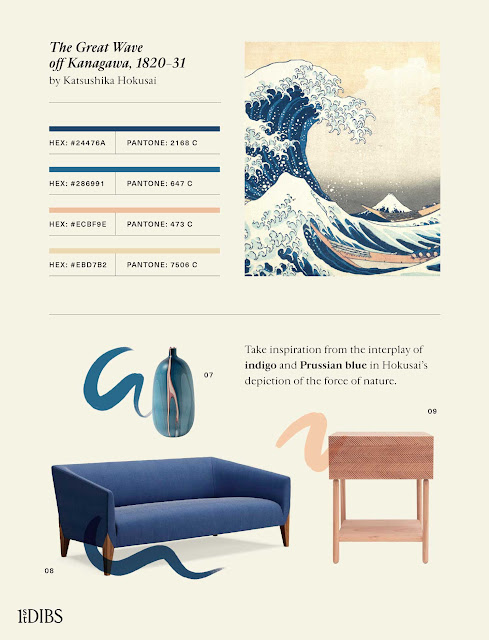
Hokusai’s famous woodblock painting The Great Wave off Kanagawa is an example of a painting with a pleasing palette thanks to its interplay of Prussian blue and indigo. It also incorporates a both pale yellow and a soft peach, serving as lovely compliments to the deep blue of the wave. Below you can find color and décor inspiration for incorporating the blues of this painting into your space.
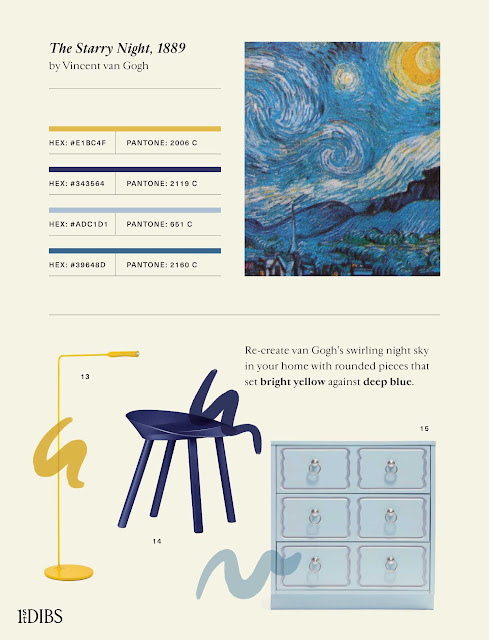
Van Gogh’s The Starry Night is another example of an iconic painting that incorporates blue. Van Gogh’s blue color palette is more lively and cosmic, broken up by specks of white and the bright yellow moon and stars. 


  1.  Green


Green is often a calming color that reminds us of the peace found in nature. Imagining lush plants and dense forests can boost your mood and leave you feeling refreshed and relaxed.


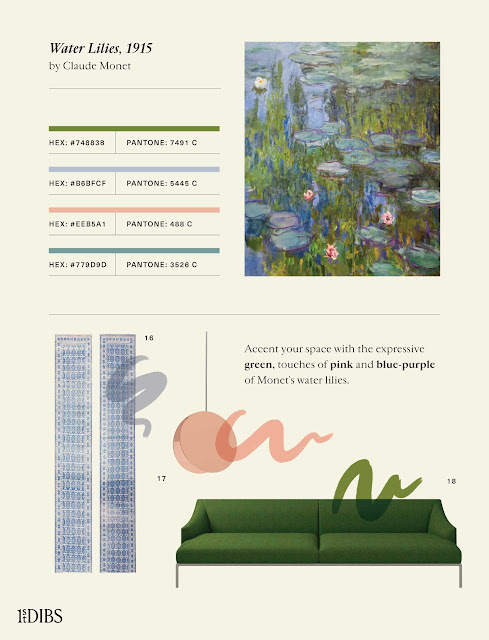
Monet painted hundreds of versions of the water lilies in his garden in Giverny, France. Like many of them, this one includes not only the blue of the water, but the deep greens of the vegetation in and around it. The painting’s color palette pairs this forest green with light pinks and purples. If you’d like to incorporate more green into your space, take inspiration from this masterpiece. 


  1. Yellow


Yellow is commonly associated with happiness, brightness, and warmth. It can be the perfect color to include if you would like to insert some energy into your space.

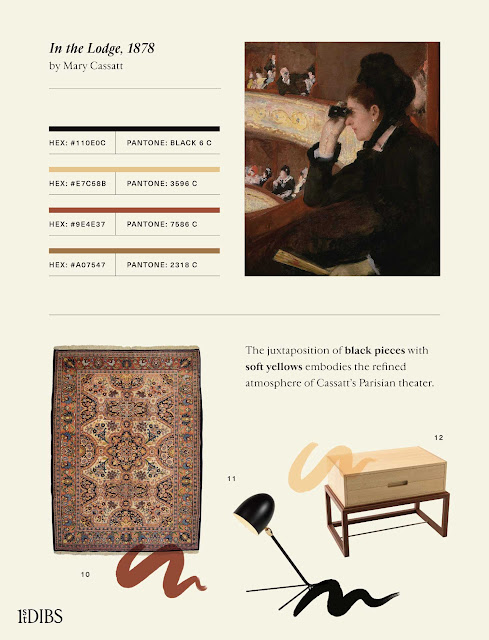
Mary Cassatt’s Impressionist painting In the Lodge weaves lovely golden-yellows with other warm-toned pigments, such as red and brown. Depicting a Parisian opera, the painting has an elegant and inviting atmosphere, one which you can capture at home by choosing traditional décor with a similar palette. 

Observing art history’s iconic works can help you learn what kinds of calming color relationships speak to you most and choose which ones will best suit your living space. However, color inspiration is all around us—if you come across any scene that moves you, take note of the colors so you can recreate them at home or in your own works.


Saturday, May 15, 2021

Blogger Recounts Mental Health Journey and Creativity

 I was contacted a while back from a blogger to check out her site called "Creating My Odyssey" as she started to rebuild her creativity and talk about her mental health experiences.  She gave me permission to share one of her entries...and perhaps we will see more of her in the future with collaborative blogs!

Dried Up


When I was depressed, I didn't want to create art, and I felt really disappointed as an adult when I felt that way. As a moody teen and early twenties at home, my mother would say: 'When you feel like that, you should paint.' I appreciate her sentiment now, but I just didn't want to paint, or do anything artistic. She couldn't possibly understand because she wasn't made that way, and she never would. At least she tried, bless her.

But, as an adult, although, when depressed, I didn't have the inner spark to want to create art. I was happy to write though. That was easy. I had had light hearted anecdotal articles published too. And I could write exactly how I felt, particularly if I felt embarrassed and couldn't verbalise what I was thinking, especially if the thought concerned Husband.

For instance, I felt sad about my hobby, the wild west. What? You may well ask. (See what I mean about embarrassment?) I wanted to be a cowgirl, a rough 'n tough, smokin', cursin', drinkin', sharp shootin' frontierswoman. Not stuck at home, looking after family. And I couldn't indulge that hobby much because I didn't have the energy and also I felt out of it because of anxiety among the more intense living history re-enactors who I was anxious may judge (some did, because I was portraying an unconventional female character).

Husband, insightfully, had said long ago when I began to head into depressions, that he could see my hobby rearing its head and being the subject of my depression. I'd be obsessed with something (I was good at being obsessed with things) and the wild west was it. I was writing my novel (about a cowgirl, naturally...) and that did help, although, of course, I wanted my book to be perfect. So, yes – that was a subject I had to write about to make sense of it.

I had considered art therapy. To paint, draw or collage how I felt. That didn't work either. I didn't want to do any of that. In order to express how I felt, I wrote. If I did do anything artistic, the subject would be anything I would normally do, nothing to do with depression or anxiety. That was what writing did for me.

But I did, so much, want to be artistic. And I wanted to be happy working in my 'creative space' (I was too embarrassed – that word again – to call it an art studio) in our conservatory. But I wasn't, for a long time, happy working there. I'd be okay for a short time, then depression would gradually swallow me up. So I wrote a lot, about lots, and not in my creative space. It wasn't until really recently that I began to feel good about being there and being creative. It's taken this long.

And I'm delving into dark, dusty corners and discovering artwork that I'd done in the dark and distant past and forgotten about. 'Wow! That's good!' I've thought, occasionally. No time for modesty, thank you. Anyway, shoving modesty aside, I'm uploading them onto Facebook and my blog and getting lovely responses to them. I'm also on the verge of recreating and organising my art area. And I'm beginning to get quite excited about it. A plant or flowers here, a water feature there, paints here, pencils there, sketchbooks here, boxed canvases there...

Yay! Artistic me is coming back!