Showing posts with label Jackie Schuld. Show all posts

Thursday, March 21, 2024

Book Review: "Therapy Private Practice"

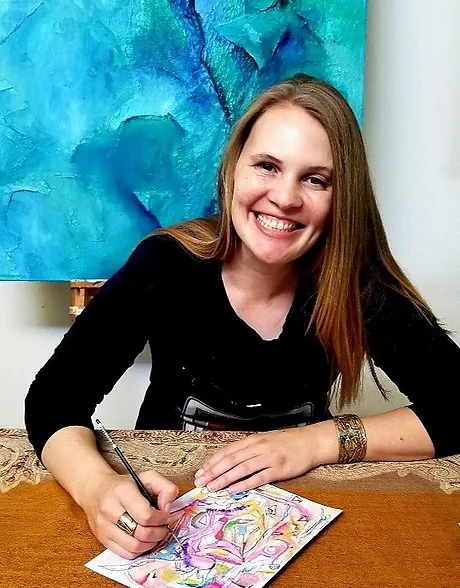
I connected with Jackie on LinkedIn as a fellow art therapist. She writes a lot of essays about various topics, such as being an art therapist, being autistic, and wisdom of how she does her work. I was delighted to receive her book on establishing a successful private practice, and wrote a brief review below.  If you are a therapist or provider of any kind, I would recommend that you check out her book to help your practice and yourself thrive!

“Therapy Private Practice: Creating a private practice that enriches you as a human and therapist” 

by Jackie Schuld, LPC, ATR-BC, REAT


As an art therapist who works in private practice part-time, this is the book I wish I had available to me when I thought about venturing into the private practice world. Rather than going solo, however, I ended up joining a group practice, which helped with a lot of the whys and wherefores I didn’t have time for or was ready to learn to do myself. I am still a part of that group practice, and it works for me since I do it very part-time on the side, but I was still quite interested to hear Jackie’s take on creating a private practice that works for you in case I decide to move over to solo practice later on.

One thing I appreciated right away was that the Table of Contents is listed both in page order and in topic order.  As a Gold/SJ, that made me very happy, especially if I want to reference something later, it will be easier to locate via topic. Topics that she covers include beginning your practice or changing what kind of practice you have, financial advice, marketing, meeting your own needs, policies that will support your practice, and even thought patterns that impact you.

Another thing that I appreciate about this book is that the chapters are short essays that are very readable.  Sometimes it’s hard to sit down and read a lengthy book that gets into the weeds (which can be just what we need at times), and this book gives us bite-size pieces to chew on and consider.  Jackie makes it clear that she is your cheerleader in making a practice that helps you – as well as your practice – to thrive.

Some of the chapters are about giving permission to make adjustments to make a practice that fits you and not necessarily what other people think it should be. Others advocate for art therapy and counseling as a field and not selling ourselves short with all of our time, investment, experience, and expertise. She wants all therapists to figure out how they work best and thrive with that, even if it may not make sense at first. Things don’t have to be the status quo, and there are ways to have a successful practice without self-sacrificing so much, as people in helping professions are so wont to do. Accessing resources, finding supports, setting boundaries and limits, finding your own niche, playing to your strengths, and the like are paramount to establishing – and maintaining – a successful practice, however you may define that to be.

Part of the content that also struck me is her line drawings that illustrate the book, which I am so happy she included (as an art therapist, I think we are drawn to that), many of which remind me of Shel Silverstein’s artwork from “Where the Sidewalk Ends” and his other poems.

Jackie’s book covers a lot of cogent topics related not only to private practice work, but also work within the mental health setting that gives good food for thought. It may be time to reinvent our work so that we will not burn ourselves out and better meet the needs of our clients, which is why we went into mental healthcare in the first place.  Will everything in the book apply to you and your situation?  Probably not.  However, it is a great read that will give you different perspectives and insights that can help you be the best – and more replenished – therapist that you can be.

Thursday, November 30, 2023

How Art Therapy Can Help Autistic Adults

 Every now and then, I have some wonderful guest writers who contribute posts to this blog.  I am happy to share such a post from a fellow art therapist, Jackie Schuld, ATR-BC, REAT, LPC.  

Jackie is an autistic and ADHD writer, artist, and therapist. Her upcoming book, "Life as a Late-identified Autistic" will be published in January 2024. She runs an art therapy private practice that specializes in late-identified autism and ADHD. You can learn more about her work at https://www.jackieschuld.com

I am thankful to present her expertise and insights on how art therapy can be helpful for autistic adults in particular.  Please read on...


How Art Therapy Can Help Autistic Adults

We autistics have incredibly complex minds. 

 We can have a hundred thoughts at once.

We can have a conversation with someone, and have a background program running that is assessing the conversation at the same time. 

 We can think deeply on a subject, connecting dozens of tangential thoughts. It’s a beautiful web of thoughts that can lead to creativity, innovation, passions, and joy.

But our complex minds can also leave us exhausted. Sometimes our minds go into overdrive as we try to process all that we took in from the day and the millions of connecting thoughts. Our emotions can also get easily sucked into the matter, leading to emotional lows.

Before I knew I was autistic, I described myself as having overwhelming emotions and thoughts.

I thought therapy would help me reduce my emotions and thoughts.

It didn’t.

I thought that meant I failed at therapy.

In reality, the therapy I received wasn’t tailored to my neurodivergent mind.

My therapists didn’t know I was autistic, and neither did I.

But now I know, and I’m doing things differently.

Instead of trying to “change” my mind, I’m learning how to work with it.

I accept that my mind will always produce a lot of emotions and thoughts. I now provide more space and mediums for my mind to process all of that at a pace that doesn’t feel overwhelming for me. I also do it in ways that feel good.

That’s what I love about art therapy. It provides me with the space to do just that.

For example, if I’m feeling frustrated about a topic, I don’t try to “talk” my way through it. That often makes it worse. Instead, I make art about it.

Art helps us to see things from different perspectives. It also lets us express our emotions fully.

Many times, our emotions need more attention before they can extinguish.

I’m now an art therapist who specializes in late-identified autism. I work with neurodivergent folx who are new to their autistic/ADHD identities.

Learning you’re autistic is freeing, but it’s also a lot to process. Art therapy can help us to do that.

Sometimes I invite clients to make collages about their autistic identities. It brings many subconscious feelings and thoughts to the surface.

Other times I invite clients to create bubble maps about their autistic characteristics. It provides the clarity and organization that our minds crave. We can also then review their maps together to identify characteristics they may not have considered.

Sometimes I invite clients to make abstract paintings of how they currently feel. I call them emotional portraits. Learning you’re autistic is a weird mix of relief, grief, anger, joy, and more. It can be a lot for us to describe. Art can help us to get all of that out.

There’s an endless amount of ways that art therapy can help autistics to feel better. There’s no “list of art therapy activities to go through,” at least not in my practice. Instead, everything is tailored to where the person is at in their journey, their interests, who they are, their comfort with different art materials, and more.

That’s the beauty of working with an art therapist, versus just doing art on one’s own. An art therapist can guide you at a pace and in a way that is suited to who you are and what you’re needing.

It won’t change who you are, but it will certainly make you feel far better about who you are.