Showing posts with label aata. Show all posts

Monday, April 21, 2025

AATA Ethics Panel Training Regarding Social Media Featuring Art Therapist Lacy Mucklow and Colleagues

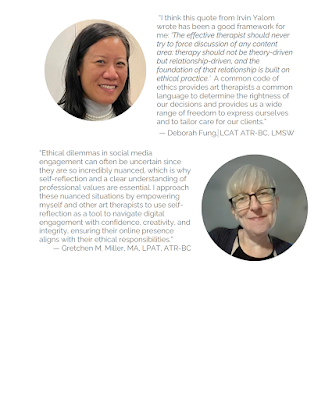
Join me and my colleagues Deborah, Gretchen, and Alicia for an online AATA Ethics training on April 22, 7-9 pm ET. We are Part 2 of a 3-part Ethics series, where we will be focusing on the ethics of social media.  Hope to see you there!

This series is FREE for AATA Student Members and offered at a discount for AATA Members. Each session is hosted live with interactive discussions and is also available On Demand to watch at your convenience. Plus, sign up for all three sessions in both series and save up to $54 on your ATCB-required Ethics and Supervision CE credits!


Register here for the training:

https://arttherapy.org/news-2025-ethics-ce-series-exploring-ethical-self-disclosure-and-clinical-referrals/

Read some of our responses about ethical challenges from me and my colleagues here:

https://arttherapy.org/blog-navigating-ethical-challenges-insights-from-our-2025-ethics-series-presenters/


Saturday, November 07, 2020

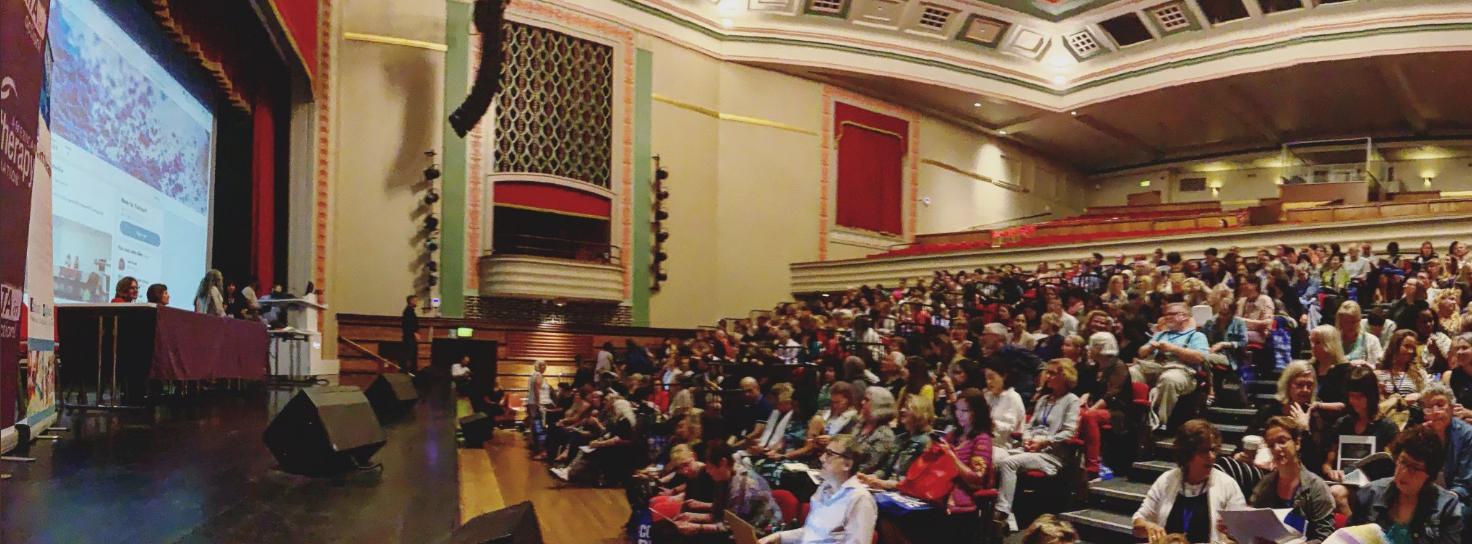
Honored to Present at the 51st Annual AATA Conference

Glad to be able to present today at the national AATA conference. We had 134 attendees at our specific presentation with several following up for more information. What a great time of training and networking!


Wednesday, February 05, 2020

Facts and Myths about Art Therapy

For those of you who may wonder what art therapy really is, art therapist Carol Olson writes a brief explanation about what it is and debunks myths people may have about art therapy in general. Included is a picture of art journaling work from my colleague Gioia Chilton for the article. Have a read! 


Posted on November 04 2019


Art Journaling by Gioia Chilton


Art Therapy Creative Space

Art therapy combines active art-making, the creative process and applied psychological theory within a psychotherapeutic relationship. There are a multitude of ways to communicate, and especially when we are struggling, facing a challenge or even a health crisis, our own words or language may fail us. During these times, an art therapist can help clients express themselves in ways beyond words or language. We are Masters-level clinicians (or higher) trained in art and therapeutic techniques that serve diverse communities in different settings, from medical institutions and wellness centers, to schools and independent practices.

Every day, art therapists work with children who are experiencing behavioral challenges such as Autism Spectrum Disorder, or are hospitalized due to a catastrophic illness. We also assist people with health challenges; individuals who have been victims of violence or other trauma—including our military service members and student survivors of mass shootings; older adults who are struggling with dementia or Alzheimer’s Disease; and anyone that needs help coping with life’s challenges.

Here are three common misconceptions about art therapy, and the facts about our profession. If you or a family member would benefit from art therapy, please use the American Art Therapy Association’s Locator to find a professional Art Therapist near you. 

Myth #1: Art therapy is arts and crafts.

People frequently confuse general art-making and crafts, or even a coloring book, with art therapy. These misunderstandings come from lack of common knowledge about the difference as well as non-art therapists without the necessary training calling what they do “art therapy.” Art therapy is a mental health profession that requires a graduate degree for entry into the field. Many art therapists continue their education to become board certified, which requires more than a thousand hours of clinical experience. Additionally, many states have laws creating distinct art therapy licenses or specific regulations under which art therapists practice.

Fact: Art therapy is so much more than making art. It is a mental health profession.

Art therapy is more than just making art. Although the act of creation can be healing in itself, art therapy takes concepts from psychology and counseling and expands on them, forming a unique field of mental health treatment in itself.

Most importantly, training in art therapy is needed to understand how to work with art materials within mental health treatment. Along with education in psychotherapy, art therapists are trained to have a clear understanding of what materials work best in treating specific diagnoses and issues, and which materials and directives are most appropriate to achieve specific goals.

Myth #2: I need to have specific art experience to benefit from art therapy.

You don't need to have any prior art experience to seek the services of an art therapist! The art therapist may consult with you prior to the session to see what materials you have experience using and may also do an assessment, as some materials are more appropriate for specific diagnoses or goals. Art therapists use a large range of materials in the creation of art, ranging from pencils, markers, or paints, to collage, found objects, clay and sculpture.

Fact: The art therapist works with the individual to find what art materials best suit their needs and goals.

Art therapy combines the act of creation, the use of a personal language of expression, and narration of process and content, with directive goals toward healing. As a field, it has its own diverse approaches and practices. Art therapists can work with you in directive sessions, where art is created with content and process in mind. Or they may work with you in non-directive sessions, where art is created spontaneously and then examined and processed with you as the client. They can also integrate art therapy approaches with verbal or behavioral approaches to enhance those modalities.

Myth #3: Art therapy is just for kids.

While art therapists have many directives to choose from, there are specific protocols that are most effective with people of specific ages. In fact, it is used with all ages, genders, and races. For example, research has found that art therapy, while not a cure for dementia or Alzheimer’s Disease, can help stimulate the brains of older patients experiencing cognitive decline, and help them communicate in a non-verbal way. Similarly, art therapy is extremely effective with children if spoken language is an inhibitor. Using metaphor or storytelling with children in art therapy helps children see issues much better than just talk therapy alone.

Art making is a visual-spatial activity that helps heal your brain from trauma and stress. Everyone can benefit. We all have our own art language too, unique to each of us. Developing their own art language helps the participant gain greater insight into themselves, builds self-esteem through the therapeutic process, and builds rapport with the therapist earlier in the process. Art made without the inhibition that could happen with verbal communication brings one closer to dealing with true issues.

Fact: Art therapy fosters relationships and provides a way to communicate beyond just talk.

As an art therapist, I have had so many “aha” moments with my own clients. I suppose one of the best was working with a father and his adolescent children on improving their relationship after a divorce. I used large scale sculpture with them to help them build trust, and work together. As they dismantled their sculpture, they began to open up and discuss the difficult issues they were experiencing at the time. I got to watch a father get closer to his teenage daughters despite the conflicts pulling the rest of the family apart. I have continued to use large scale sculptural work with families since.

American Art Therapy Association - Carol Olson

Carol Olson, LPC, ATR-BC, CSAC, is a board certified art therapist and licensed professional counselor who has been practicing in the area of sexual violence and abuse since 1994. She currently works privately with clients at this time, generally in family therapy. For over thirteen years she worked in trauma through sexual and domestic violence agencies. She was formerly the Executive Director of the Rappahannock Council Against Sexual Assault, in executive leadership at a state coalition and a national advocacy and treatment agency and was most recently Executive Director of James House Prevention and Intervention Services. In tandem with administrative and clinical work, Carol lectures extensively on trauma and art therapy.

Her degrees are: BS in Psychology from Virginia Commonwealth University, MA in Art Therapy from George Washington University, and MA in Counseling from Liberty University. She has done additional post graduate studies in art therapy, gender studies, addiction and counseling.

Sunday, December 29, 2019

AATA Highlights the 2019 Accomplishments of the Art Therapy Profession

2019 has been a big year for art therapy. The American Art Therapy Association summarized the accomplishments in the field this year.

  
December 19, 2019
As we prepare to head into the next decade, we’d like to take this opportunity to take stock and reflect on what we have accomplished collectively as a profession in this 50th year of our association’s life. We’ve made remarkable gains in legislative goals and public awareness for the profession as well as significant improvements and expansions in membership experience and programmatic offerings.
Let’s look back together at the accomplishments of the past year!

Collaborations & Public Awareness

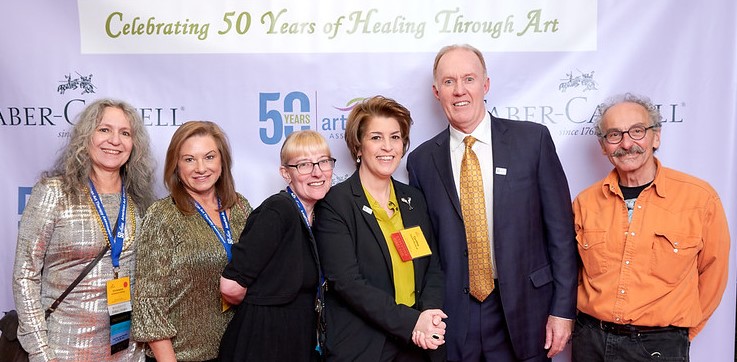
Faber-Castell USA CEO Jamie Gallagher (second from right) attended AATA’s 50th red carpet celebration during the 2019 conference in Kansas City. From left: then AATA President Dr. Christianne Strang, Director of Events and Education Barbara Florence, Board Member Gretchen Miller, and Executive Director Cynthia Woodruff, and Faber-Castell USA Artist Franz Spohn.
As the nation’s leading voice for art therapy, we work to educate lawmakers and the public on the power of art therapy.
  • We celebrated our 50th Anniversary Year with a year-long campaign to celebrate the history and look to the future of our profession. Read the wrap-up here and check out our 55th collaborative video!
  • This year we continued to foster partnerships with shared goals in public awareness and fundraising. The AATA started relationships with Faber-Castell USA (check out their webpage and AATA member Carol Olson’s blog post “Art Therapy 101: Sorting Facts from Myths”). You may have even met the CEO Jamie Gallagher at conference in Kansas City! Also in 2019, the AATA joined National Parks Service’s Healthy Parks Healthy People initiative. We hosted the webinar “Bringing Art Therapy into the National Parks” with over thirty national parks in attendance. The AATA is now working with NPS on pilot art therapy programs following the positive response to this webinar.
  • We are always looking for creative new ways to spread awareness about the field. In March we released our very first Ask Me Anything featuring Cheryl Doby-Copeland.
  • We love highlighting the life-enhancing work our members do every day through our Featured Member series! This year the Journal of Pain & Systems Management will expand awareness of this work by sharing artwork by 12 of AATA’s 2019 Featured Members as the cover art for each journal issue in 2020.
  • The AATA continues to issue regular content through our BlogNews, and newsletter, Art Therapy Today as well as our social media platforms. Follow us on FacebookTwitter, and Instagram!

State Legislative Victories & Accreditation Milestones

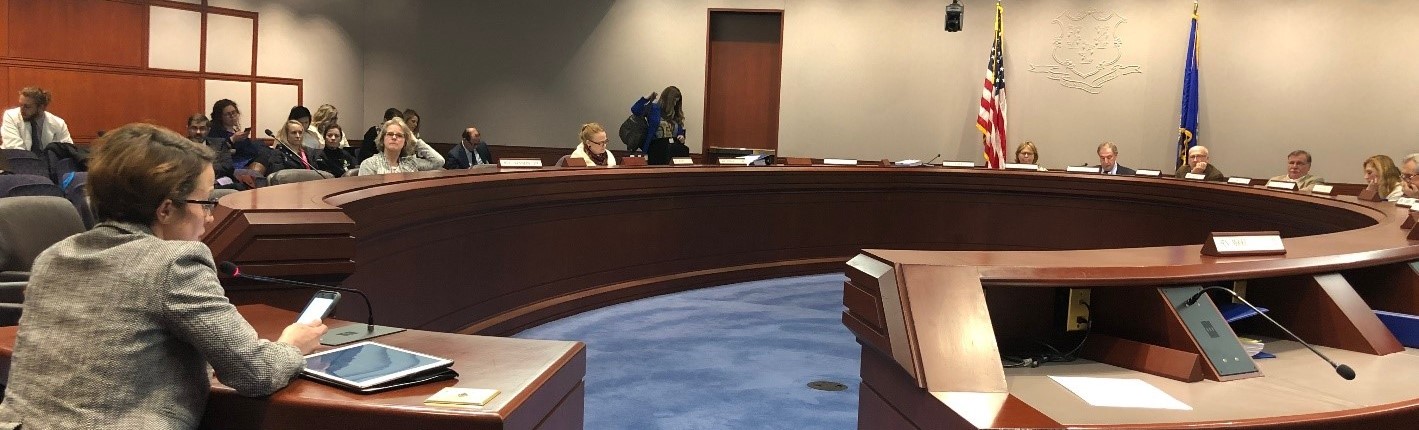
Art therapists in Connecticut testify before the Joint Committee on Public Health on February 11, 2019.
This year we worked with our local advocates and volunteers to introduce more art therapy legislation than ever before and took a more active role advocating at the federal level for access to mental health care and the arts.
  • The increased momentum in our licensure success continues! This momentum builds on the dedicated work of so many throughout the AATA’s history. In an October blog post, “5 Building Blocks to Achieving Art Therapy Licensure in All 50 States,” we review some of the milestones that made our licensure strategy possible today and outline our approach to licensure in detail.
  • It’s hard to keep up with all the action in the states, so we’ve made it easy by creating a Legislative News category on our News page where you can scroll through the updates. Here are the key legislative events from 2019:
    • This year art therapists in Connecticut achieved independent licensure! The Clinical Licensed Art Therapist (CLAT) is already being issued by the Connecticut Department of Public Health.
    • Bills making legislative fixes to education requirements in existing art therapy licenses were enacted in Maryland and Oregon.
    • Art therapy legislation was introduced in 14 states during the 2019 legislative sessions, including eight bills for independent art therapy licensure (CT, DC, IA, MA, NH, PA, TN, and OH).
  • Our momentum in obtaining external accreditation also continues to grow. The first 12 art therapy graduate programs have received initial accreditation through the Commission on Accreditation of Allied Health Education Programs (CAAHEP). Ten of the programs received accreditation in 2019, and we look forward to announcing more in 2020. The transition from approval through the AATA’s Educational Programs Approval Board (EPAB) to accreditation through CAAHEP has been years in the making, and it’s great to see these results! In addition to further professionalizing art therapy programs, the availability of third party accreditation has prompted several institutions to create graduate programs in art therapy, expanding access to education in the field.

Strides in Federal Advocacy

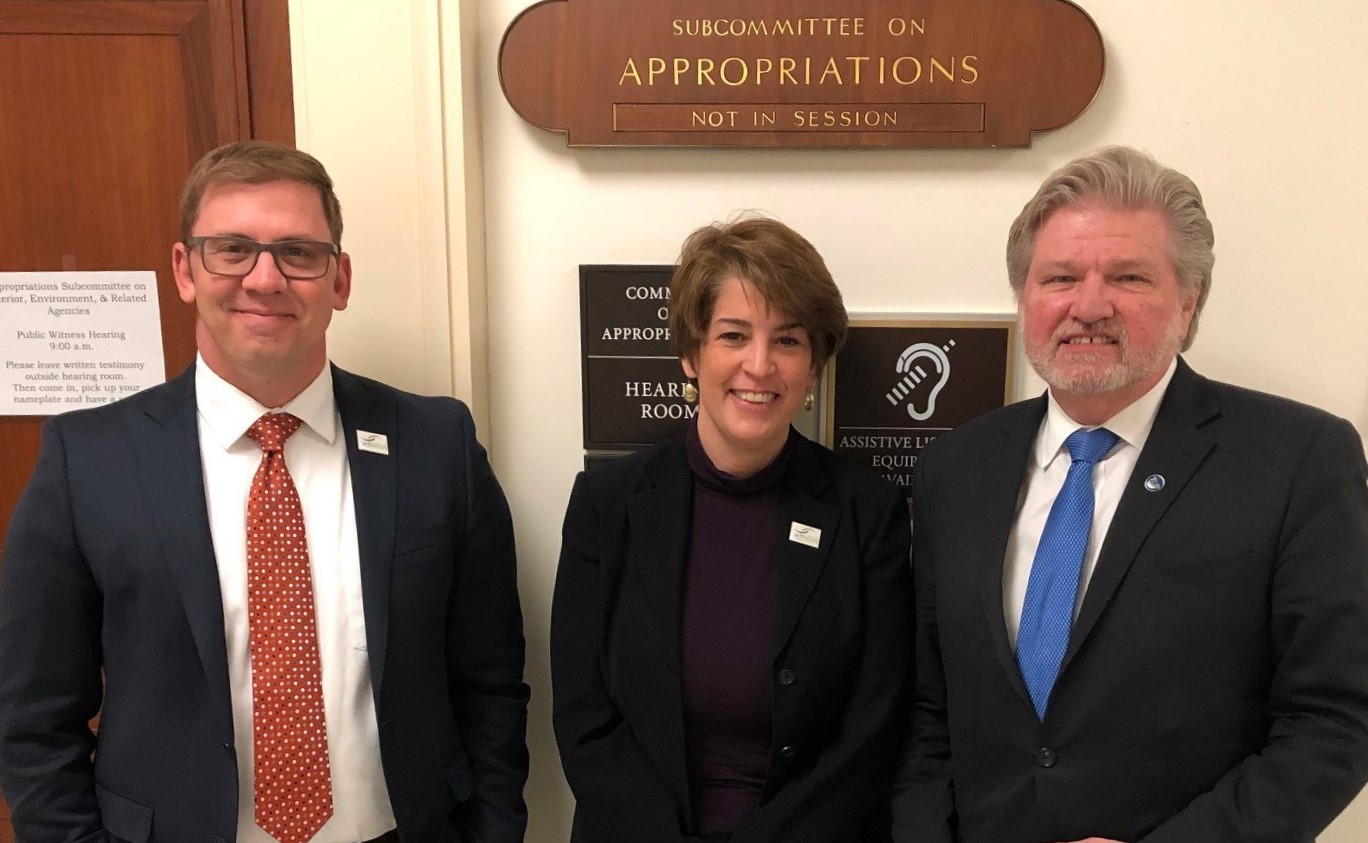
Christopher Stowe, Master Gunnery Sergeant, USMC (ret.); Cynthia Woodruff, AATA Executive Director; and Americans for the Arts President and CEO Robert Lynch.
While our top priorities, licensure and reimbursement for art therapists, occur at the state level where we focus our legislative efforts, we also stay apprised of federal mental health and arts issues. We advocate with our collaborators and coalitions for improved mental health and arts policies.
  • In February of this year, Christopher Stowe Master Gunnery Sergeant, USMC (ret.) testified on behalf of the AATA alongside Americans for the Arts CEO Robert Lynch before the House Interior Appropriations Subcommittee. Mr. Stowe spoke of his life-changing experience with art therapy through the Creative Forces program at the National Intrepid Center of Excellence (NICoE) at Walter Reed and urged the Subcommittee to increase funding for the National Endowment for the Arts (NEA) by $12.5 to $167.5 for FY 2020. We’re pleased to announce that on December 17th the House of Representatives passed their FY 2020 funding bills which included funding the NEA at $162.25 million, a $7.25 million increase, the largest amount in a decade! Also included was $5 million in direct appropriation to the Veteran Affairs Department for creative arts therapies to treat veterans through their Whole Health initiative.
  • We continue to work with coalitions and collaborating organizations to advocate for access to quality mental health care and the arts. This year for the first time ever the, AATA joined the National Council for Behavioral Health and over 600 advocates for Behavioral Health Hill Day 2019 to advocate for legislation to improve our nation’s mental health care. Once again, we took a stand for the arts by participating in Americans for the Arts’ Arts Advocacy Day, taking an active role in drafting the briefs and training advocates in the policy agenda around arts in health and arts in the military. With our colleagues in the National Coalition of Creative Arts Therapies Associations (NCCATA), we worked to spread awareness during Creative Arts Therapies Week in March and issued joint letters in support of two insurance bills in New York that would have expanded coverage for licensed creative arts therapists (LCAT) in the state.
  • Recognizing the importance of access to mental health care in the 2020 elections dialogue, the AATA joined the Mental Health for US, a nonpartisan educational initiative focused on elevating mental health and addiction in national policy conversations by empowering grassroots advocates and improving candidate and policymaker health literacy, as a coalition member.
  • Through our coalitions such as the Mental Health Liaison Group and the National Alliance of Specialized Instructional Support Personnel (NASISP), the AATA signed onto over 20 joint letters to lawmakers in support of improved federal mental health policy.

New Professional Development Opportunities

Attendees at the Inaugural International Art Therapy Practice/Research Conference in London
The AATA is committed to continue providing your favorite programs and features while also expanding with new experiences and responding to your needs.
  • On December 7th, the AATA offered our very first virtual conference! With over 40 attendees, 13 presenters, and seven sessions, this new virtual format paves the way for even more online educational offerings that bring the content to you.
  • The AATA’s 50th Conference in Kansas City was a success! Almost 1000 attendees enjoyed learning through over 230 education sessions and many more opportunities for networking and exploring the depths of the field. We were pleased to host U.S. Representative Sharice Davids (KS-3), a champion for mental health, and Kansas State Representative Jerry Stogsdill (District 21)sponsor of the Kansas art therapy licensure bill, at conference!
  • In July of 2019, the AATA teamed up with the British Association of Art Therapists to offer the Inaugural International Art Therapy Practice/Research Conference that gathered over 700 attendees from more than 35 countries in London.
  • We are continuing to expand our course offerings on the AATA’s Institute for Continuing Education in Art Therapy (ICE/AT).
  • Beginning in December, we are also launching a brand new online platform, compatible with members’ MyAATA login, to further streamline your online experience with the AATA and to make accessing these continuing education courses a more user-friendly experience.

Enhanced Membership Experience

This year we have continued our work to make sure every member’s experience with the AATA, whether in-person or online, is a positive one.
  • Our MyAATA online community forum passed the 1,000 posts milestone! Members have discussed a wide range of topics within the art therapy field and participated in hosted series such as the Journal Chat, that provides an opportunity to dialogue with authors who had articles that were published in 2019 issues. It has been truly rewarding to see this community grow and to witness art therapists lifting each other up in real-time, exchanging best practices and words of encouragement.
  • We’ve welcomed Anita Douglas, Senior Manager of Membership to our National Office team this year and she has been hard at work in improving membership experience, renewal, and retention.
Thank you to all our members for your support in fulfilling our mission of advancing art therapy – we could not do it without you! Check out our 2018 and 2017 wrap ups to see how far we’ve come over the past several years. We look forward to what we can accomplish together in 2020!

Wednesday, July 06, 2016

AATA Conference 2016

I enjoyed my time at this year's annual American Art Therapy Association Conference, this year held in Baltimore, MD!  I had a great time meeting with colleagues, former classmates, former interns, and hearing some enlightening presentations.  I also enjoyed some great food in the Inner Harbor!

The last time the AATA conference was in Baltimore was 40 years ago, in 1976!

A bright view of Baltimore's Inner Harbor with restaurants, shopping, museums, and more!


A beautiful view of the Inner Harbor from my room

The "Color Me..." Series was well-represented in the AATA Bookstore!

Wednesday, March 11, 2015

The National Initiative for Arts and Health in the Military - Third National Summit at NIH

I was privileged to be invited to attend this summit about expressive therapies with the military, held at NIH at the end of February.  We heard about how helpful the arts therapies are with the military populations in all kinds of settings, including art therapy, music therapy, and poetry therapy.  There was agreement that these therapies need to be at the forefront of service members' treatment, but the largest obstacle is implementation.


Third National Summit: Advancing Research in the Arts for Health and Well-being Across the Military Continuum 


(on left) Melissa Walker, MA, ATR, Art Therapist/Healing Arts Program Coordinator at National Intrepid Center of Excellence, with the cover of National Geographic Magazine’s February, 2015 issue, featuring her work (and pictured with Donna Betts, PhD, ATR-BC, AATA President-Elect). 

PRESS RELEASE Wednesday, March 11, 2015 - 1:50pm

March 11, 2015 /3BL Media/ - American Art Therapy Association delegates and art therapists who work with military service members proudly represented the art therapy profession at this recent event in Washington, DC. The National Initiative for Arts & Health in the Military advances the arts in healthcare for veterans, service members, their families, and caregivers. The Summit is sponsored by Americans for the Arts and hosted by the NIH National Center of Complementary and Integrative Health with additional support from the National Endowment for the Arts. The day-long program examined the critical research needs impacting veterans, military service members, and their families in promoting health and well-being from pre-deployment to reintegration. 

 Centered on the evidence base addressing efficacy of the creative arts therapies in treating service members and veterans, presentations emphasized topics delineated in the NIAHM White Paper and Blueprint for Action. Dr. Donna Betts, ATR-BC, AATA President-Elect and George Washington University art therapy professor, co-conducted an engaging break-out session on “Arts-Based Research and Innovative Tools across Military/Veterans Settings.” This panel and discussion presented innovative programs designed to support military service members and veterans. Betts discussed her research with The Warrior Stories Platform, a Department of Defense DARPA-funded project that incorporates graphic novel authoring in computer format, integrated into art therapy clinical treatment planning for veterans with PTSD. Discussion focused on how such projects can inform practice and research and support collaborations across military treatment facilities and VA clinical settings. 

 Cynthia Woodruff, AATA’s Executive Director, was proud to be in the company of art therapists dedicated to serving our military service members, including Melissa Walker (NICoE), Jackie Biggs (Fort Belvoir), Rosemarie Rogers (VA Hudson Valley), Laura Spinelli (VA Connecticut Healthcare), and Rebekah Wiggins (Charles George VA Medical Center). The AATA successfully represented the profession of art therapy at this important event, which clearly signifies increasing public awareness of credentialed and board-certified art therapists as uniquely equipped to treat the mental health needs of our service members. About the American Art Therapy Association 
The American Art Therapy Association, Inc. (AATA) is an organization of professionals dedicated to the belief that making art is healing and life enhancing. Its mission is to serve its members and the general public by providing standards of professional competence and developing and promoting knowledge in, and of, the field of art therapy. 

For more information, please visit www.arttherapy.org.

See more at: 

Monday, August 27, 2007

2007 National AATA Conference

38th Annual American Art Therapy Association Conference
"The Art of Connecting: From Personal to Global"

Hyatt Regency Hotel
Albuquerque, New Mexico
November 14-18, 2007

~~Click here to register online~~

~~Click here to see the program schedule~~


FEATURED SPEAKER
Thursday, November 15, 10:30 - 11:30am
Meinrad Craighead, MFA
Threshold: An artist's entry into creativity
The spiritual journey is an experience of birthing into creativity. Using slides of her own artwork as well as that by artists throughout history, Meinrad Craighead will midwife an entry into the mystery of creating. Her talk will illuminate the threshold as it marks moving toward and into the place of the unknown. The threshold is the pulling aside of the curtain—having the energy and courage to pull aside the curtain to search inside for images already present.

FEATURED SPEAKER
Friday, November 16, 8:45 - 9:45am
Alexander Shaia, PhD, ISST/STA, LPC
All Journeys-One Journey
All Journeys are One Journey. No matter if it is our clients or ourselves, in art and in life, there is a progression of inner landscapes. The four-fold journey involves climbing the highest mountain, crossing the storm-tossed sea, resting awhile in a glorious garden and, possibly walking along a road of riches. This sequence is universal, sequential, invariable, and ever recurring. Using visuals, personal and client stories, and poetry, Dr. Shaia will take us through the archetypal life journey, "Quadratos."

FEATURED SPEAKER
Saturday, November 17, 8:30 - 9:30am
Thomas Singer, MD
Image and Complex in the Collective Psyche
Complexes are psychic structures that are a common cause of psychological distress. They most frequently cluster around parental images as well as issues such as power, inferiority, and sexuality. The emerging theory of cultural complexes, a new addition to Jung's original notion of complexes, takes complex theory beyond the personal to the level of the group psyche. Cultural complexes frequently constellate around group historical experiences of trauma, dislocation, and discrimination. They often reveal themselves in the art and media of a particular culture, since images can "carry" complexes, and their effects can be recognized in the psyche/behavior of both groups and individuals. Differentiating cultural complexes from personal complexes is not only of theoretical value, but can be useful in clinical practice with clients in group and individual sessions. In today's world, recognizing images as carriers of cultural complexes can be helpful in gaining perspective on cross-cultural, political, and other conflicts.