Art therapy licensure is now the law in DC! Thank you to our sponsors Chairman Phil Mendelson, Councilmember Vincent C. Gray, Councilmember Mary Cheh, and Councilmember David Grosso and to the support of Mayor Bowser. A special thanks to Bernie Demczuk for guiding us in this process and Michelle Palmer, Executive Director of the Wendt Center for Loss and Healing, for testifying on our behalf. Art therapists have served DC residents for a long time and this license will ensure that DC residents receive qualified art therapy for years to come. #dcarttherapy
What a great sense of innovation, compassion, and community this young girl has to help out her fellow children, especially during the COVID crisis. I love her quote that "art is always there for me."
I found this great resource for art therapy (and other creative arts therapies) for military members and their families around the country. Check out all the opportunities!
I was notified this morning that "Color Me Calm" made the Evening Standard's "Best Adult Colouring Books of 2020 to Help You Relax." I'm very honored it was among the few chosen for their list. Apparently, adult coloring is making a comeback during the pandemic!
Get creative and de-stress with the best colouring books for adults
Ellie Davis | 1 day ago
Throughout this lockdown period, we’ve all been looking for ways to pass the time, whether that’s by honing our baking skills, or picking up the art of cross stitching.
One activity that has seen a huge surge in popularity is colouring. Go back to basics by investing in a good, intricate colouring book that will work wonders in relieving stress and anxiety. Your childhood favourite activity has been given an adult twist as a calming way to switch off from the excessive amount of screen time that we are all facing.
Bring art back into your life and use this relaxing activity as a much-needed distraction from the craziness of 2020. You only need a good colouring book and a rainbow selection of pens and pencils - and we can certainly help with the former. You will be surprised at the meditative space that it leaves you in as well as the sense of accomplishment of your colourful creation.
This is important for both mental health employees and employers to read and be made aware, if they haven't already considered it and the potential aftermath.
Mental Health Workers: The Other First Responders in this Pandemic
Why mental health workers need safeguarding and protection more than ever
In response to the COVID-19 outbreak, there has been a lot of talk in the media about the importance of preventing overload to our health care system. What we are only starting to hear about is its (anticipated) overwhelming impact on mental health services… and its providers.
Mental health workers are just as prone to burnout as any other care providers. Given the predicted impact of this pandemic on the well-being of virtually everyone, we need these service providers to be stronger than ever. Mental health workers need protection now, to ensure that they are available and prepared for the coming mental health crisis.
Nobody is immune to the pandemic’s negative mental health effects.
Social distancing measures keep loved ones apart, businesses and schools closed, people without steady work or income, and other services overloaded. The stress to essential workers and their families is obvious. We are living in a time of great uncertainty, with no end in sight.
Psychiatrists Dr. Andrew L. Smith of The Ottawa Hospital and Dr. Neil de Laplante of the University of Ottawa support that while social distancing measures are necessary, they could “lead many of us to feelings of isolation and powerlessness”, which are both linked to anxiety, depression, and possibly suicide.
The pandemic could be detrimental for those already facing complex mental health challenges: chronic anxiety, trauma, delusional paranoia, and addictions to name a few. There are people without the cognitive ability to understand the situation. Some are without a working memory. And others could be further subjected to daily abuse.
Health care workers and first responders are also high-risk groups for mental health challenges during this pandemic. They face prolonged exposure to high-stress work environments, in addition to the personal struggles we all face waiting out COVID-19. Post-trauma effects are a real threat to this group. Positively, there are mental health resources specific to first responders, but I wonder how accessible or effective these services will be long-term.
With the anticipation of a mental-health crisis secondary to this pandemic, mental health services could be more important than ever. Undoubtedly, we will need a strong system to help those most at-risk to the consequences of this pandemic, and to continue caring for our most vulnerable persons. To maintain a strong mental health system, we must protect and safeguard its most important resource: its workers.
Without its workers, the mental health system will breakdown, and this is already starting to happen.
As a mental health worker, I can tell you that many of us will be or are on the verge of burnout, the longer this situation continues as is or worsens. The state of the world is pushing people into survival mode; those who feel powerless and unprotected will resort to fighting for themselves. In survival mode, one can hardly help his or herself let alone others. In my field, workers are already walking off the job for self-preservation.
I am a front-line mental health worker supporting persons who require 24-hour care. I work in a home in close proximity to about 8–11 people (workers and residents) during my shift, where social distancing is near impossible, and PPE availability is extremely limited.
Last week, I was informed for a second time that someone in the home would be tested for COVID-19. I was left to wonder what will happen if the results are positive. How will we manage a potential outbreak at work? Will I be put off work to isolate? Have I exposed the elderly person I live with to the virus? What will I tell my family if the result comes back positive?
For confidentiality reasons, I cannot give specific details. I can tell you that at this time, there is no confirmed case of COVID-19 at my place of work. But this is a possibility that I need to be prepared for, and yet, there is very little certainty on what will happen if there is an outbreak.
Not knowing what to expect leads me to feel powerless and anxious. Still, I try to remain strong and composed for the people I support, who depend on my care.
I support people who have a very limited understanding of what this pandemic means. For them, it means a lot of changes to regular routine, a lack of contact with the outside world, and a lot of waiting and boredom. Without structure and purpose, their risk of self-destructive behaviour increases. It cannot simply be explained to them what might happen if there is an outbreak in the home. This could create further anxiety, paranoia, and undue stress.
To the best of our ability, my front-line team tries to keep routine in the home, offer alternative activities, and practice a lot of supportive counselling and patience. Most importantly, we try to keep individuals safe and healthy, not only from the virus, but from mental health crisis.
This means that we as essential workers need to keep ourselves safe and healthy. We must be so careful not to come in contact with the virus and bring it to work. Conversely, we are trying not to bring the virus home to our loved ones should there be an outbreak at work.
Just as important, we must look after ourselves mentally, so that we can continue to work effectively for those who need us. This is easier said than done, given the circumstances.
We have limits, and a lot of us will be prone to burn out the longer this situation continues to negatively impact us both personally and professionally.
We are human, not super heroes.
I think I speak for most mental health professionals during this time. I have helpers and healers in my own life who I know are struggling personally in this pandemic. One even said she is cutting back on work to look after herself and her family.
I know front-line workers who are thinking about a leave of absence or extended holiday at some point, knowing that they cannot sustain working under stressful conditions long-term without hitting “reset”. Some have even opted for early retirement to protect their health and their loves ones. Meanwhile, many of us are currently working overtime, and this field was facing a staffing crisis even prior to the pandemic.
We are only in the beginning stages of this pandemic, and essential care workers are already walking away.
If mental health workers all burnout, what replaces us? When mental health crisis reaches its peak in response to the pandemic and overloads mental health services, what happens then?
As Dr. Andrew L. Smith and Dr. Neil de Laplante note, the mental health system is already “chronically under-resourced”, and vulnerable persons face the greatest consequences if the system breaks-down in response the pandemic crisis.
Funding is necessary to keep mental health resources in place or develop new services as the effects of the pandemic evolve. Additional funding is required to implement health and safety measures to protect people living and working in group-homes, institutions, and long-term care facilities. But money is not the only important resource.
In addition to funding, mental health workers need safeguarding and protection. The most important resource in the mental health system is its workers. Without anyone available to provide the service, funding loses its purpose.
Eventually, COVID-19 will no longer be a significant health threat. However, we can expect a long-term impact on society. Loved ones will be lost. People will struggle to recover financially. Some might be traumatized. Vulnerable persons could face significant abuse in isolated situations. Addictions could surge. Not everyone will come out of this pandemic being able to continue on their previous life.
Mental health workers are not miracle workers, but they are necessary when people are in crisis, which will be an inevitable result of the current situation.
So, how can we protect and safeguard the most important resource in the mental health system? Really, how can we better protect all essential workers right now?
Protecting Rights
In emergency situations, employers are allowed (under government Acts) to override collective agreements to “protect” the safety of its workers or clients. For example, employers might be allowed to temporarily change an employee’s job classification or location to provide support where needed. Unfortunately, this gives employers a lot of free reign, rendering unions who protect employees almost powerless.
Employers should still be held responsible for their decisions. Yes, temporary changes may need to be implemented under extraordinary circumstances. But as much as possible, employers need to consider the mental well-being of their employees. This means listening to employee concerns and respecting their right to refuse unsafe work. If we are facing a pandemic that will impact us for months to a year, employers need to ensure that they do not make decisions that cause undue long-term stress to their employees. Otherwise, they risk being left short of those essential persons.
Compensating According to Risk
Appropriate compensation to me means that employers consider unforeseen risks associated with jobs and what that means for their employees. While I do agree that wage increases should be implemented in some cases (kudos to these companies), there are other ways in which essential workers can be compensated or supported during this pandemic.
Increased paid “personal days” for full and part-time employees will allow essential workers to take time off to care for themselves and their families. Extra sick days should also be provided if a worker comes into contact with COVID-19 on the job. Expectations that employees use their vacation time or go without pay are unreasonable when workers are coming into contact with an unforeseen risk associated with the job.
Protecting Health
Government and employers need to take more responsibility in ensuring that essential workers have what they need to stay healthy right now. Sourcing products like disinfectants, gloves, and hand sanitizer, and ensuring that essential workers have these items will reduce at least one stress associated with this pandemic. I support that everyone needs access to these items, but front-line workers especially need them to keep themselves and the people they live and work with safe.
Additionally, initiatives could be set forth to ensure that essential workers have the means of obtaining nutritious foods for themselves and their families. Employers can only benefit from keeping their workers strong during these times.
Providing Solutions
We are in a time of great uncertainty, and I can respect that experts in health and government are dealing with a situation that they have never handled on this scale before. I do believe that there should be honesty and transparency regarding the pandemic and its predicted course.
What is concerning is the presentation of scary problems without action or solution. Advising everyone to “get used to this way of life” (i.e., social distancing) for months to a year or longer is not practical or helpful. This is not sustainable. We all know this, and it will become increasingly difficult to support people through this pandemic without long-term solutions.
Mental health workers can help people manage and cope with the situation they face, but that only goes so far. Until people start to feel hope and control, until they can re-establish some normalcy in their lives, the looming mental health crisis will grow.
— — —The only way to prevent or minimize this crisis is to come up with alternatives to just “staying home.” -- -- --
Nothing about this pandemic is simple. There are no easy answers. I respect that most advisors and decision-makers, at all levels, are doing their best.
We need to work together to see the situation from all angles, to prevent further crisis.
The people who make up health care services are the most essential resource to safeguard. In the coming weeks, it is imperative to everyone’s well-being that action plans are implemented to keep workers safe and healthy.
Now is the time to help and protect these workers, so that they are available and strong when they are needed.
I know a lot of people are wondering how to pass the time and deal with the stress from all this pandemic management. If you like to color, Crestline Books are releasing more titles with some affordable books by myself and Angela Porter in the next few weeks or so to help you reduce your stress and ease your boredom. You can find them at Amazon, Barnes and Noble, Books-a-Million, and through Quarto Publishing. #KeepCalmAndColor
I've been getting a lot of resources on how to deal with anxiety around COVID-19 and how to deal with the quarantine at home, so I thought it might be helpful to post things here so that people can access them and see what they can use. I will add more as I come across them.
Bessel van der Kolk, MD, On the Global Coronavirus Crisis: Steering Ourselves and Our Clients Through New & Developing Traumas https://catalog.pesi.com/ShowTime/3924402
Mental Wellness Resource Packet (especially good for therapists to use with clients):
Many people, including art therapists, are looking for resources to help people manage during this unprecedented time of managing a global pandemic with the novel coronavirus COVID-19. The American Art Therapy Association has worked hard to create a resource page with many kinds of links to provide assistance to help art therapists as well as for the public to access for themselves. Click on the picture below for the resource page.
It was very cool to come across a post about 5 self-care things that you can do during the pandemic in self-isolation, and they included "Color Me Stress-Free" as a way to help occupy your mind and ease stress. A perfect way to spend your time at home! I'm truly honored to be included.
Day-to-day life as we all know, has come to a screeching halt due to the COVID-19 pandemic. As the realities of adjusting to social-distancing and self-isolation start to kick in, it’s easy to feel anxious and stressed. In these times, it’s so important, if not essential to prioritize self-care.
Here are 5 self-care products that will help you get through the next few weeks of social distancing without losing it.
Coloring books and chill are now a thing. So if you want to de-stress, relax, and take your mind off this crisis: get coloring!
Adult coloring books are not the ones we grew up with, the adult version has more intricate patterns and pictures. The Color Me Stress-Free by Lacy Mucklow is one you’ll find therapeutic to color!
A lot of people are trying to find ways to cope with self-isolation and social distancing during this time of managing the coronavirus pandemic. Some people are accessing art therapists in remote sessions or doing guided artwork at home. Here is an article that focuses on how making art helps people cope.
Many
countries have currently imposed either a formal lockdown, or otherwise
recommended that people stay indoors in their own homes as much as
possible. This form of social distancing will help slow the spread of
the coronavirus SARS-CoV-2, but it’s not always easy. However, previous
research on isolated groups suggests that art therapy might offer some
support.
Art therapy has been successful in combating depression among isolated populations such as prisoners ... [+]
Getty
People in isolation are
at increased risk of developing mental health problems, such as
depression or increased anxiety. Researchers know this from studies that
have previously been done among people who were quarantined during
previous disease outbreaks.
In the 2003 SARS
outbreak, for example, only those directly at risk were quarantined, and
only patients were isolated. But now, during the coronavirus outbreak,
many of us are stuck at home. For people who live alone, this situation
is also likely to put them at risk of depression or anxiety.
Even
though being isolated in this way is new for many of us, there have
always been groups of the population who lived with limited social
contacts. Think of prisoners, for example, or patients recovering from
medical procedures that require a period in isolation. These groups have
been well-studied, and researchers know quite a lot about how people
fare when they’re spending a large amount of time on their own. One
thing that seems to help is art therapy.
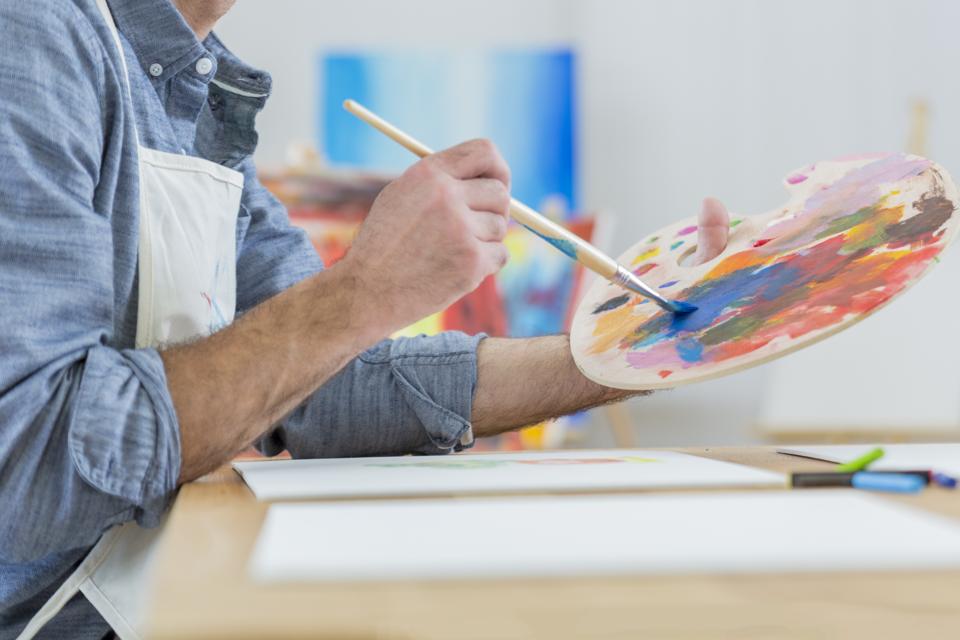
Art therapy is a form of
psychotherapy that uses the creative arts as a therapy medium. Instead
of talking for an hour, you might be painting or sculpting or otherwise
expressing your thoughts through a creative medium.
In some of these
situations, people received group art therapy. Of course that’s not
possible during the COVID-19 outbreak, but some art therapists are
finding ways to connect with people online. The American Art Therapy
Association collected resources for art therapists to help them continue to do their work during the outbreak.
Not everyone has access
to a remote therapist to guide their art therapy, so some are turning to
online guides. This is different from the guided forms of art therapy
that have been proven to work well with people in isolation, so it may
not work as well — but with no other option for therapy, making art at
home is at least a step in the right direction!
The UK’s Channel 4 is even working on a program with Turner Prize-winning artist Grayson Perry
to inspire families in isolation to make art at home. But many people
have taken to simply creating art on their own to work through their
thoughts while in self-isolation, and some have shared their art on
social media.
Art therapy isn’t a panacea - its effects on dementia
are still debatable for example — but its use to combat depression in
social isolation is well-documented, and it may just help some people
currently struggling with being in lockdown.